for more information about semen retention check out my e-books
my bestselling book: THE MAGIC OF SEMEN RETENTION
New book alert: THE CONSPIRACY AGAINST SEMEN RETENTION: THE TRUTH THEY DONT WANT YOU TO KNOW
Last Updated on October 15, 2026 by Wechuli.B
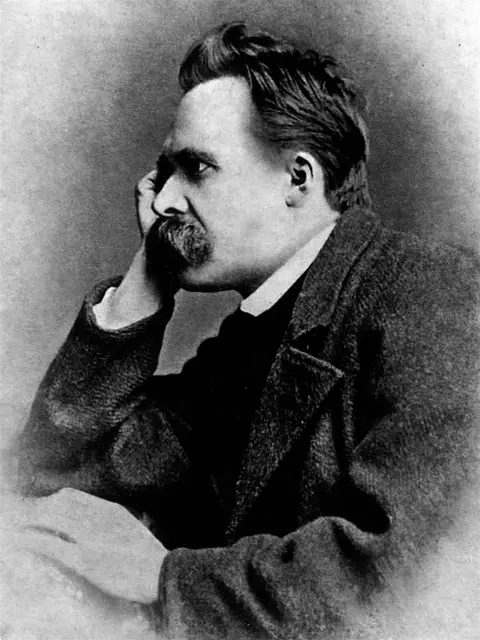
Friedrich Nietzsche (1844–1900) was a famous German philosopher known today for the phrase amor fati, meaning “love of fate.” He is also known for challenging traditional morality and religion and for declaring that “God is dead,” a phrase that reflects his views on the decline of religion in modern society.
What many people don’t know are his views on sexual abstinence, chastity, celibacy, or what we refer to today as semen retention.
Friedrich Nietzsche’s writings about lust showed that he supported semen retention and was against compulsive sexual behavior. In his book, Thus Spoke Zarathustra, he wrote, “Is it not better to fall into the hands of a murderer than into the dreams of a lustful woman? And just look at these men: their eye says it – they know nothing better on earth than to lie with a woman.”
This quote shows that Nietzsche had a negative attitude toward lust, as he believed that being controlled by sexual desire is more dangerous than facing physical danger. When one is controlled by lust, according to Nietzsche, sexual intercourse becomes his main focus, and as a result, he avoids aiming for higher ideals or greater ambitions. Lust consumes his entire psyche, and all he thinks about is getting laid.
Nietzsche viewed semen retention or sexual restraint as a practice that serves an individual’s higher pursuits. For a creative, this meant preserving the conditions necessary for sustained thought and intellectual achievement.
In his book, On the Genealogy of Morality, he wrote, “Every artist knows how damaging the effects of sexual intercourse are to states of great spiritual tension and preparation. The most powerful and most instinctual artists don’t acquire this knowledge primarily by experience, by bad experience—it’s that “maternal instinct” of theirs which makes the decision ruthlessly to benefit the developing work among all the other stores and supplies of energy, of animal vitality. The greater power then uses up the lesser.”
According to Nietzsche, spiritual tension is highly important for creative work, and sexual activity prevents creativity by ensuring that this energy is released. In other words, the philosopher believed that when an artist is preparing to create something powerful, all of his energy is gathered in one direction. If that energy is spent on sexual pleasure, it reduces the force available for the creative act. Because of this, the most creative artists naturally avoid sexual indulgence during important periods of creation. The greater power of creativity uses up the lesser power of sexual desire.
Nietzsche believed that true artists understand that sexual activity can weaken the intense mental and spiritual state needed for deep creative work. When an artist is preparing for something great, he needs all his energy focused inward. He argued that the greatest artists do not learn this lesson only after making mistakes. Instead, they have a natural instinct – like a mother protecting her child – that tells them to guard their energy. They protect their creative work by not wasting their creative energy on sexual pleasure.
Although Nietzsche supported semen retention or sexual abstinence, he asked individuals to stop forcing themselves to be chaste. According to him, forcing oneself to be chaste has negative consequences. He only encouraged sexual abstinence or semen retention among those who find that it comes to them naturally and effortlessly.
For as he wrote, “To whom chastity is difficult, it is to be dissuaded: lest it become the road to hell – to filth and lust of soul. Do I speak of filthy things? That is not the worst thing for me to do. Not when the truth is filthy, but when it is shallow, does the discerning one go unwillingly into its waters. Truly, there are chaste ones from their very nature; they are gentler of heart, and laugh better and more often than you.”
According to Friedrich Nietzsche, chastity is not suitable for everyone, especially those who have to struggle constantly against sexual desire while practicing it. He believed that forcing oneself to abstain from sex can sometimes lead to psychological suffering and an unhealthy preoccupation with lust.
Therefore, if Nietzsche were alive today, he could have supported semen retention, but he could have advised us to only retain our seed when we really want to or when we feel a strong inner urge to do so. He could have discouraged us from practicing semen retention just because other people are doing it or because we have heard about its benefits. He could have warned us that forcing ourselves to retain our seed could lead to more harm than gain.
To Nietzsche, semen retention came naturally, as he deeply desired a solitary, ascetic life that allowed him to focus on his work. Although rumors suggest that he visited brothels when he was young, evidence strongly suggests that he never married and was mostly celibate. It is also said that Nietzsche had a hard time with women, and this was one of the reasons he was celibate. Some say that he contracted syphilis and remained single out of a sense of moral responsibility that mainly involved avoiding exposing women to the disease. It does not matter whether he was an incel (involuntary celibate) or not. What matters is that Friedrich Nietzsche practiced semen retention, and it might have come naturally to him because he was so obsessed with work, struggled with women, or wanted to avoid spreading a disease. I believe the ascetic practice of semen retention contributed to making him one of the greatest philosophers of all time, who saw the true nature of life and asked us to embrace everything that happens.
Part of the information in this article is from my book, CELIBACY: THE SECRET TO EXTRAORDINARY INTELLIGENCE & CREATIVITY